
Career Management Coaching

Who Do You Want To Be Known As

Career Management Coaching

Following Up is Not Always Easy. . .

Aside

up-d-people-men-person-team-39156641DreamstimeFollowUp062216


Pain often leads a conversation

Over six months ago, our city was mourning the loss of a young man who was shot while walking down a street.  After a video of the shooting was released, citizens vehemently blamed people they believed were personally responsible for the death.   Anger and bewilderment followed in our neighborhoods and across social media.  The personal anguish of citizens was felt, recognized and acknowledged resulting in municipal and federal investigations  beginning the work to respond to the demands understanding the Why of what happened. The citizen focus over the past few months appeared to be quiet and perhaps blurred.  When people are in mourning, learning how to deal with the pain is not an easy road to go down.  Pain leads the conversation.

I am writing this blog post because of two separate instances that happened this week.  The first occurred shortly after I arrived back in the City from a business trip.  I spoke to a man and asked a follow-up question of why downtown streets were closed due to police protection.  He was surprised I knew about what happened since I was away, and then responded that a construction crew accidentally hit an energy mainline.  Responding to his surprise, I said, “I’m signed up with the city to receive weather and other alerts.”   His perception: “That’s because you are So and So.”  The conversation remained friendly and the man understood from me that all citizens were able to receive the same alerts.

The second instance was my learning that the US Justice Department would hold a meeting where citizens would have an opportunity to raise their concerns about interaction with the police department – an outgrowth of the investigation that began six months ago.  I listened to this news shortly before 6:00am.  The next day the Illinois Progress website announced only 30 people attended the first Justice Department forum.  http://www.illinoisprogress.org.

Following up on issues that are important to you is not easy when you are in pain and mourning.  If I had not listened to the news early in the morning, I would not have known about the US Justice forum that evening.  The business of municipal and federal agencies is for the common good – so for those who would  like to attend a future forum, here is the listing, again from Illinois Progress:  http://progressillinois.com/news/content/2016/06/15/us-justice-department-hold-public-forums-chicago-police-department-probe.

As you Choose Who You Want to be Known As this week, consider reaching out to someone who would benefit and want to know about these future forums.  Thank you and have a great week!

“Jo Ann” M. Radja, Executive and Career Management Coaching
http://www.wordpress.com/disclosures

http://creativecommons.org/by-nc-sa

What’s Your Popularity Choice?

Aside

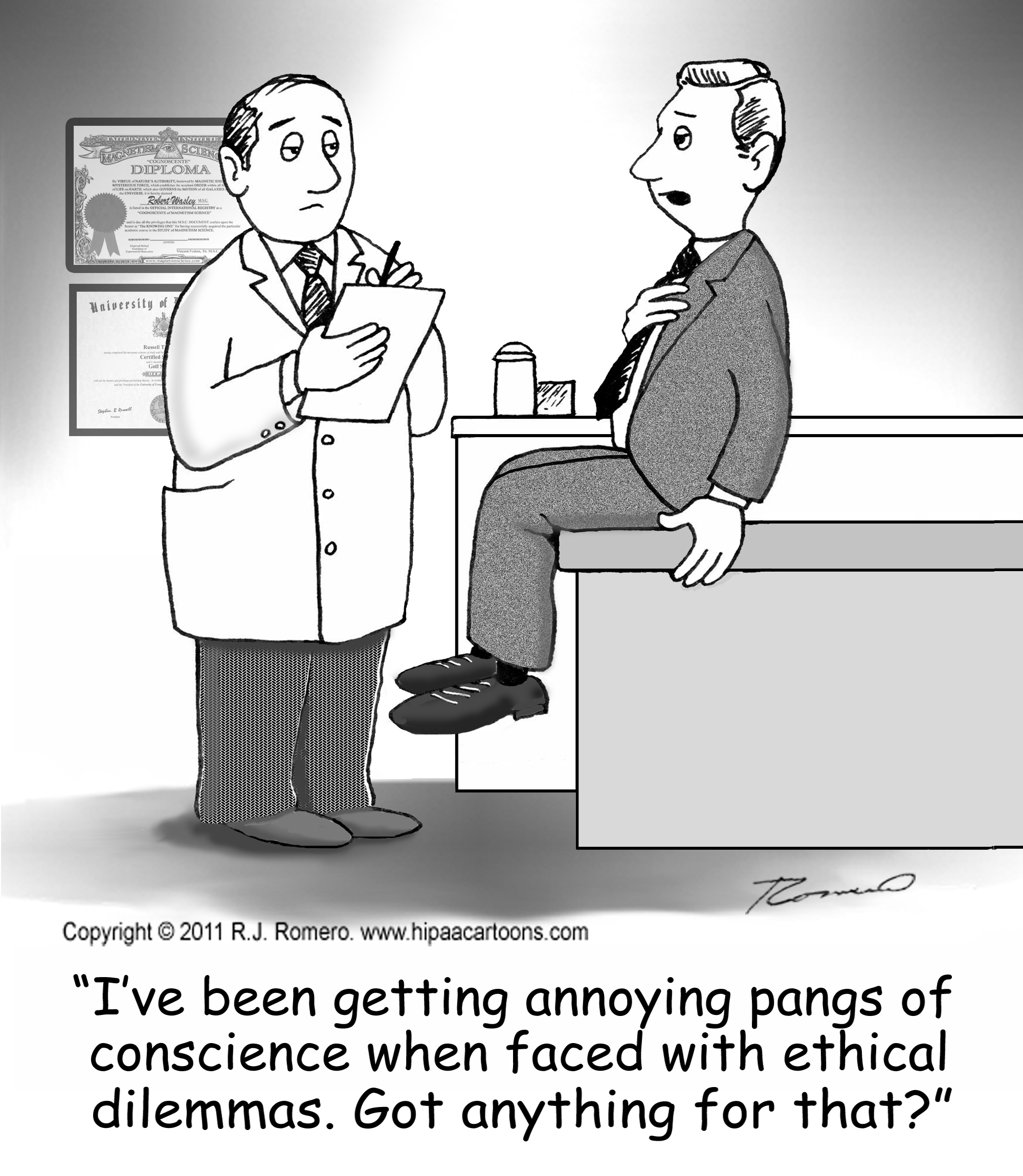
cartoon-patient-asks-doctor-to-get-rid-of-ethics_e102businessEthicsCartoonsBING06086


Earlier this afternoon, I published the following post on the social media LinkedIn;  https://www.linkedin.com/pulse/whats-your-choice-popularity-jo-ann-m-radja

Here is the text of that post:

What’s YOUR Choice for Popularity?

Associate Supreme Court Justice Stewart Potter is known for choosing to include an American colloquial phrase in one of his Opinions; namely, “I’ll know it when I see it.” Although Justice Potter used that phrase to define pornography, many of us also use our visual sense in deciding moral ethical issues. It’s generational, isn’t it?   We’ve moved from, ” A picture is worth a thousand words,” to “Selfie, anyone!”

Three Researchers, two from Oxford University, Jim A.C.Everett, Phd Candidate and Molly Crockett, Associate Professor of Experimental Psychology and David Pizarro, Associate Professor Department of Psychology from Cornell University, created an ethical scenario to understand whether a decision based on Popularity had any influence on its choice. The creativity of adding a choice of Popularity to well-established interpretations of ethics allows for inclusion of present-day understanding of morality. The scenario is:

“Imagine that an out of control trolley is speeding

towards a group of five people. You are standing

on a footbridge above, next to a large man. If

you push him off the bridge onto the track below,

his body, will stop the trolley before it hits the

five people. He will die, but the five others

will be saved. Should you push the man off the

bridge.”

The Researchers also added a twist to their “trolley problem” as they asked a question: how would you trust a social partner, based on their answer to the trolly scenario. Here is the May 5, 2016 URL for, “Want to be popular? You’d better follow some simple rules”:   http://blog.practicalethics.ox.ac.uk/2016/05/cross-post-want-to-be-popular-youd-better-follow-some-simple-moral-rules/

While many academics may challenge the findings of these Researchers, their result is applicable for business settings. It is:

thEthisandCompliancefromBING060816


So the next time you have to make a tough call, remember – people like people who follow moral rules.”

Have a great week as you Choose Who YOU Want to be Known As!

“Jo Ann ” M. Radja, Executive and Career Management Coach


Do YOU have an Elephant in the Room?

Aside

beautiful-woman-carrying-elephant-young-outdoor-47141699Dreamstimedotcomfreestockimage 051116


When the light around you lessens / And your thoughts darken /. . . Search yourself and see / That it is your own thinking / that darkens your world.   John O’Donohue

Earlier this afternoon, the following post was published under the title, “What’s YOUR Elephant in the Room?” https://www.linkedin.com/pulse/whats-your-elephant-room-jo-ann-m-radja    Here’s a copy for your reading:

“I just finished reading another LinkedIn Post about the paradox of innovation; namely, termination due to computer innovation. It took courage for an innovation expert who advises companies about innovation to share his personal story of how and why it came to be that his company fired staff. Yet, that ELEPHANT in the room idiom, had to be handled in a manner considering the employee’s best interest.

When we think about the idiom phrase of handling “the ELEPHANT in the room,” it usually refers to a subject matter that no one wants to discuss. Our brain perceives the conflict greater than it may be, represented by a large insurmountable figure.

Business Leaders accept the fact that the challenge of an ELEPHANT in the room must be dealt with. It is a conflict. Sometimes all that needs to be done is to have a conversation and the ELEPHANT is no longer in the room. Neuroscience, however, has offered a remarkable perspective, using an analogy of a Rider and an Elephant. The perspective is given by a Massachusetts Institute of Technology Neuroscientist, Mr. Emile Bruneau.

Bruneau explains the analogy as an example of how the brain handles conflict by stating – all the Rider can do is to train the Elephant because the Elephant is more powerful that the Rider. The Rider cannot control or fully understand the Elephant. While this story is recited in a Post by the United States Institute of Peace in an effort to teach people how to deal with conflict. I believe it speaks volumes for the business actions we are involved with. A tool is introduced to deal with conflict, “universal empathy.” http://www.usip.org/olivebranch/2016/05/05/dalai-lama-offers-hope-youth-leaders-and-vice-versa?utm_source=newsletter&utm_medium=email&utm_term=event&utm_campaign=events_weekly

We know we cannot control another individual. Since we do not understand the perspective of the individual, represented by the Elephant idiom, we need to ask open-ended questions so that a two-sided conversation takes place. The How of this neuroscience perspective is to approach an Elephant in the room, with universal empathy. Questions such as, “How would you describe. . .” “What did you think would happen if . . .? “What did you expect would happen. . .”

What’s remarkable is that neuroscience now helps to explain the issue of how the ELEPHANT in the room, comes to be – in the first place. The ELEPHANT is an idiom character representing conflict, triggered by an unconscious bias. The tool — new phrase of “universal empathy” becomes a positive application to use with the conflict idiom.

The term “universal empathy” may become mainstream because it is an inclusive term. We want and do take the first step in handling a conflict. As we begin to practice the use of universal empathy – when we access our own Pause button – perhaps we can alleviate the ELEPHANT idiom character showing up. It’s another way of handling ourselves and Choosing Who We Want to be Known As in our chosen career. Have a great week!

“Jo Ann” M. Radja, Executive and Career Management Coach”

http://www.wordpress.com/disclosures

http://creativecommons.org/by-nc-sa

What is it Right, Wrong or Gossip?

Aside

Business-man-shredding-a-document Google042516

Out of some little thing, too free a tongue /  Can make an outrageous wrangle  Euripides

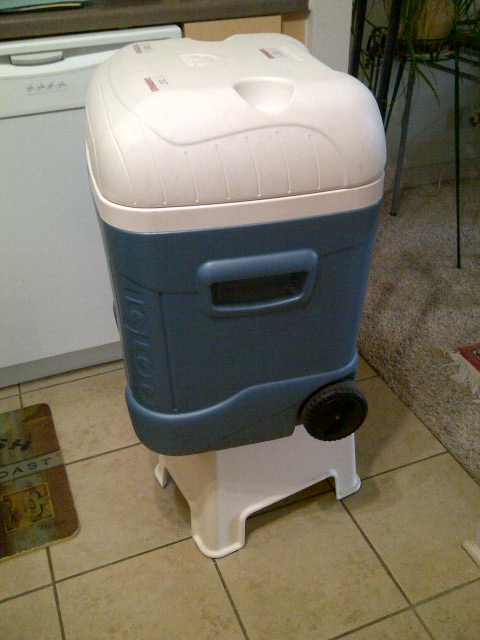
We sometimes forget that mistakes people make – are nonsensical.  Here’s an example.  Last Saturday I brought down to the loading dock of the building where I live three bags of paper; a worker from the shredding company was waiting for the paper to load onto his truck.  The bags were inside a wheeled, carry-all cooler that I use to cart around groceries and other items for my convenience.   The worker took each bag out individually and when he looked down at the bottom of the carry all, he saw some items he decided were garbage.  Which they weren’t.  He didn’t say anything to me about these items, he did say something to someone else.

My apartment stored a vacuum cleaner which was broken and could not be repaired. I left the loading dock area and went back to my apartment to retrieve it.  Another tenant saw me wheeling the vacuum cleaner, that I placed in the carry-all cooler toward the building recycling area; he offered help; he explained the vacuum cleaner had to be placed in a dumpster, not the recycling area because it had a plastic exterior cover.  He wheeled the vacuum cleaner to the dumpster (which I didn’t know existed), lifted up the carry-all cooler that held the vacuum cleaner and hoisted it over the top of the dumpster is a few seconds.  As I quickly said, “What are you doing? the carry-all cooler wasn’t even 2 years old; it is not garbage.”  “Oh, yes it is, the man replied.  The man outside (the shredding company worker) said your carry-all cooler carried garbage!”  Huh!  Needless to say, my wheeled carry-all cooler was removed from the dumpster, wiped clean, and is available for my use again.  Gossip has a life of its own and spreads more quickly than the truth.

IMG-20160425-00816It’s important to remember, whatever is left for pickup anywhere outside, it is available for anyone to look through and use. Happily, no garbage was in my carry-all cooler and the misconception was corrected.   No matter what your career path may be, let’s hope the perceptions we hold about someone else are based on reliable facts.  As you Choose Who You Want to be Known As this week, enjoy a gossip-free day!

Mindfulness also is a platform that may be utilized when faced with the example I have shared with you:  Observe, Describe, Accept, Don’t take it Personally and be Non-Judgmental.  Again, enjoy your week!

“Jo Ann” M. Radja, Executive and Career Management Coach


A Common Place Term: Bystander

Aside

diffusion-responsibility-bystander-effect-illustration-crowd-witness-act-crime-doing-nothing-47422863It’s in the news recently, the term Bystander Effect or Bystander Action.  It’s the principle – when in a group of people, personal responsibility to assist/help someone is mostly not recognized.  Last week on March 30th,  the following post was published on Linkedin.com/Pulse on this subject:  https://www.linkedin.com/pulse/its-catching-now-understanding-jo-ann-m-radja

imageslookfordiagnosisdotcomPreviousNextbystandereffect040516

The issues of Bystander Actions are present in our society at all levels.  Vice President Joe Biden has been involved in a Bystander action prevention program to discourage violence on college campuses and is planning to visit Pittsburg, PA today: http://www.post-gazette.com/local/city/2016/04/05/Vice-President-Joe-Biden-in-Pittsburgh-today-for-It-s-On-Us-campaign/stories/201604050156  and the photo, to the left, is from the website:  www.lookfordiagnosis.com/mesh_info.php?term=Bystander+Effect&lang=1

Since WordPress.com represents the spirit of collegiality, I would like to share with you my September, 2015 presentation notes on Bystander Actors in the workplace.  It was prepared for a specific industry and is easily updated to fit any industry.  Included within the presentation are insights of Professor Mary Rowe from MIT, Senior Advisor – Compliance Strategist and Attorney, Joe Murphy, and Margaret Heffernan, Author of: Why We Ignore the Obvious to Our Peril, Willful Blindness.

As you Choose Who You Want to be Known As, have a great work week!

“Jo Ann” M. Radja, Executive and Career Management Coach

Notes: Understanding Bystander Actions by Jo Ann M. Radja with Insights from Dr. Mary Rowe Ph.D September, 2015

Scenarios attachment   and  Bibliography and Resources

http://www.wordpress.com/disclosures

Culture Diversity Awareness Perspective

Aside

CotCotCotRenardsPINterest012014


Be forceful with yourself, learn to integrate the negative, harnessing its force to cross the boundaries that would confine you.  John O’Donohue

Earlier today I published the following post: https://www.linkedin.com/pulse/article/weekend-cultural-perspective-jo-ann-m-radja for your weekend reading. . . thPZBEH363 Easter Tree Egg BING 032416

“Most of us read daily – reports, emails, online newspapers, LinkedIn posts, etc. A Spring surprise occurs when you click on a post and a brief read becomes memorable because it provides a new perspective.  The document I read is a brief read and is a take-away from a Nonviolent Leadership for Social Justice Retreat, written by Shameless Heart Coach, Marina Smerling.

Very simply, we are reminded to look into ourselves first.  Pay attention to what emotions are bubbling up in you when a trigger of words are spoken.  You begin the conversation because you know yourself very well.  And yet, an unconscious bias is trying to take hold in you while you want to control your reaction to the trigger of words.  A practice of not helping someone who didn’t ask for help may be the key to handle a trigger of words.  The issue is not the trigger itself, it is how are you handling yourself in the situation.  What are YOU paying attention to within yourself.

A perspective of how to handle yourself is to reach out as an ally.  As an ally you take away the “rank and privilege” connotation.  “I am your ally” is welcoming and creates a space that answers the question, “Why are your here?”

The photo above depicts a cultural practice of an Easter Tree.  What? you might say. Why would someone want to do that?  Perhaps it is another opportunity to understand the diversity in our community that believes the Easter Eggs represent new beginnings.  New beginnings is a universal concept that each of the member Coaches of the LinkedIn Group: Coaches for Equality and Diversity (CED) represent to foster understanding of these issues and its dynamics to the world at large.

 So what new beginnings during this Spring Season are you contemplating, as you Choose Who You Want to be Known As?   Whatever holiday you practice during the 2016 Spring Season, have a Happy Holiday!

“Jo Ann” M. Radja

Martha Lasley, Co-Founder of Leadership That Works, posted in the CED Group Marina Smerling’s document; written permission to share it with you was  given by Coach Smerling via Coach Lasley: http://www.leadershipthatworks.com/documentFiles/665.pdf

https://www.wordpress.com/disclosures

http://creativecommons.org/by-nc-sa


What’s Your 2016 Spring Surprise?

Aside

spring-1256806_640Spirit is an invisible force made visible in all life.  Maya Angelou

It happens often, you change for one reason or another. People you knew a number of years back are unable to accept the change. Apparently you surprised someone because of your development growth. What kept you together in a circle no longer applies It could be as simple as you no longer enjoy eating a certain food, or you lived in the same neighborhood and moved away, or you received a promotion that the other person wanted. Your Spring Surprise happens and you want to move forward.

Alternatively, you may be on the cusp of a change – in the process of transition. Your challenge is to assist someone to accept the transition in your career. Using the emotional intelligence matrix of. . .

observing,

describing,

accepting,

not taking it personally, and

not judging the other person. . . is one strategy to consider. Choosing Who Do You Want to be Known As during the transition process is your personal responsibility that you do not take likely. 

This weekend as the Spring Equinox greets us, very best wishes for YOUR Spring Surprise. . .

So, I

Persevered.

Resilience paid off.

It’s the first day of Spring and

Not too late to

Give back to those who were kind to me.

Doubts tried to creep into my mind for a while this past winter.

And were swept away.

Yearnings will come true as you focus on

what’s important to you. ©Jo Ann M. Radja*


“Jo Ann” M. Radja, Executive and Career Management Coach

http://www.wordpress.com/disclosures

https://creativecommons.org/by-nc-sa

* This anagram was first published by me on March 20, 2015 via LinkedIn.com/Pulse


A Parody for early March, 2016

Aside

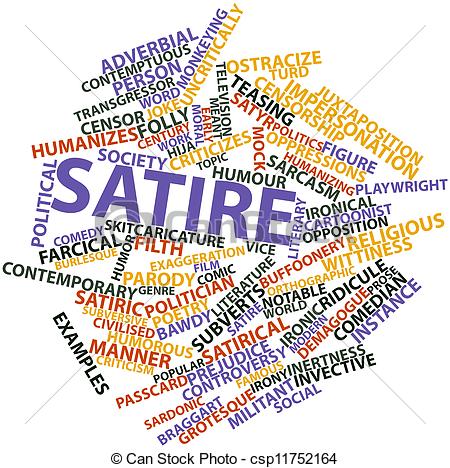
can-stock-photo_csp11752164viaBING030416 SATIRE

Here is a parody on the issue of customer service.  It’s the first week of March, 2016; we recognize that we are only responsible for our actions as we attempt to diffuse the conflict “ball” thrown at us.  One way is to find humor in the situation. . .

E. xcuse

T. he unwelcoming you

H. ear.

I. t’s Thursday and we have few

C. ustomers.

S. o, we forget the service training we were given.©

As You Choose Who You Want to be Known As this month of March, consider humor as a means to diffuse conflict.  Enjoy.

“Jo Ann” M. Radja, Executive and Career Management Coach

https://www.wordpress.com/disclosures

https://creativecommons/licenses/by-nc-sa


“Taming the Judgment”

snowy-white-owlBING120213This post was originally published on October 24, 2014 by the social media platform LinkedIn at:  http://www.linkedin.com/pulse/article/20141024202444-32215190-weekend-thoughts-taming-the-judgment?trk=mp-edit-rr-posts

“Weekend Thoughts — Taming the Judgment

A few months ago, I finished reading a book by Margaret J. Wheatley: Turning to one another. Simple Conversations to restore hope in the future (2009). Ms. Wheatley follows the principle of Occam’s Razor – the simplest answer appears to be the right answer. What’s the simplest task we all share – communicating. “It’s not the differences that divide us. It’s our judgments about each other that do.” If we think about the last time we may have rolled our eyes or became quiet while listening to someone, what judgment did we have that caused the rolling of the eyes or the quietness. How did that emotion (underlying judgment) stop a positive conversation from beginning or continuing?

Let’s face it. We sometimes are not at our best in handling a situation. I may be biased because I like Chicago Pizza more than New York or California Pizza. Yet, I can appreciate and learn the uniqueness of each presentation of Pizza and the different ingredients. Once we recognize the bias for what it is, it helps to tame the judgment directing our actions, to allow anopen conversation to understand another’s perspective. Mr. Wheatley’s Turning to One Another is an enlightening process of understanding ourselves more than we might initially realize.
As you Choose Who You Want to be Known As, when a recent conversation didn’t go as well as you may have wanted, consider what you wanted to have happen. Was there an underlying judgment you may have had about the subject matter, or how the other person spoke or presented his viewpoint? An unconscious judgment can be tamed, once we identify it. The issue becomes, do you want to? How will it help you as you manage your career? ”

“Jo Ann” M. Radja, Executive and Career Management Coach

https://creativecommons/licenses/by-nc-sa

http://www.wordpress.com/disclosures


What’s a Monday to YOU?

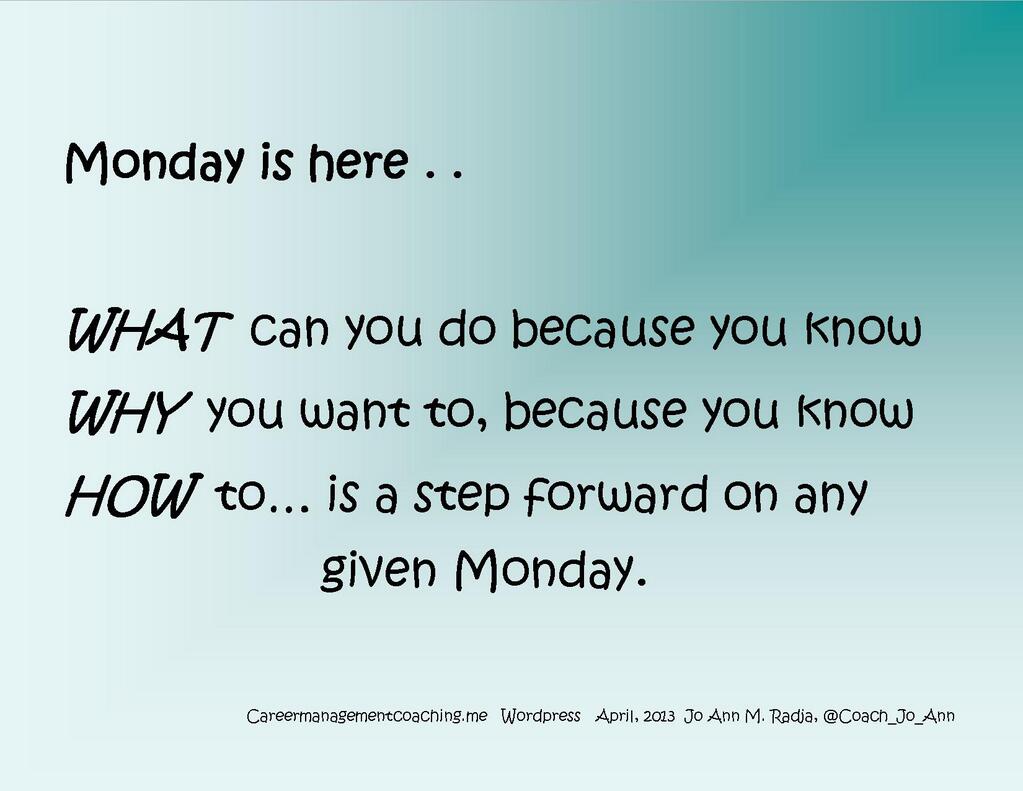
BHbtFLqCIAARfj0040913 ExcerptFromCoach Jo Ann's blog post Monday

We’ve enjoyed the holidays and are back at what we love to do best to earn a living.  The above design quote was originally published by me in April of 2013, at this site: careermanagementcoaching.me.   I hope you give your best to your career this year as we begin the first week of January 2016!

“Jo Ann” M. Radja, Executive and Career Management Coach

http://www.wordpress.com/disclosures

http://creativecommons.org/licenses/by-c-sa