
This gallery contains 1 photo.
Thanks to all of you for your Comments and Likes this year. It is much appreciated. With gratitude, Jo Ann M. Radja

This gallery contains 1 photo.
Thanks to all of you for your Comments and Likes this year. It is much appreciated. With gratitude, Jo Ann M. Radja
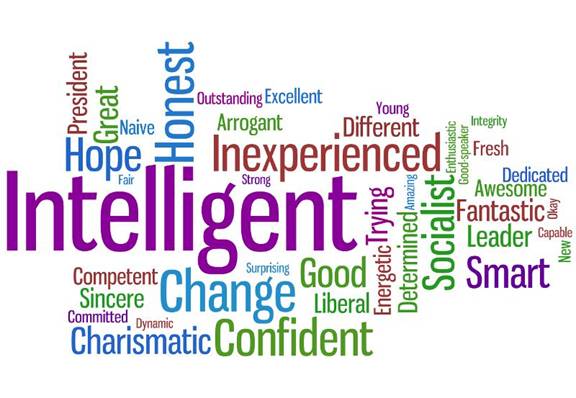
It’s interesting how people want others to know who they are. We like to be known either by our strengths, by our family position or by what we do for a living. Yet, there are times when a situation arises where we may say, “Please don’t label me as . . . . .” We express those words because we want to choose how we are evaluated, and perhaps because the label we heard “rubbed us the wrong way.”
Our salary depends on our performance for a position that we chose to accept. So, our employer does label us for the position we hold and we agreed to that label. Under what circumstances does labelling come into play in our careers? While researching a few blog ideas, I came across a fresh presentation of how people can be defined in their roles at the office. It is called Dr. Edward de Bono’s “SIX THINKING HATS” [registered mark]. The California State University at Los Angeles prepared a brief slide share presentation explaining each “Thinking Hat” …
http://web.calstatela.edu/faculty/jpark/Six%20thinking%20hats.ppt
Should you be a Red Hat and strive to become a Green Hat, how would you obtain the educational training to do so? Online and brick and mortar classes are available as well as many Human Resource Departments. Business and Civic organizations also offer programs for self-development. As you Choose Who You Want to be Known As let your Label shine though as you manage your career. Enjoy your day!
“Jo Ann” M. Radja, Executive and Career Management Coach
http://www.wordpress.com/disclosures
http://www.creativecommons.org/licenses/y-nc-sa
Notes: http://www.debonothinkingsystems.com/tools/6hats.htm
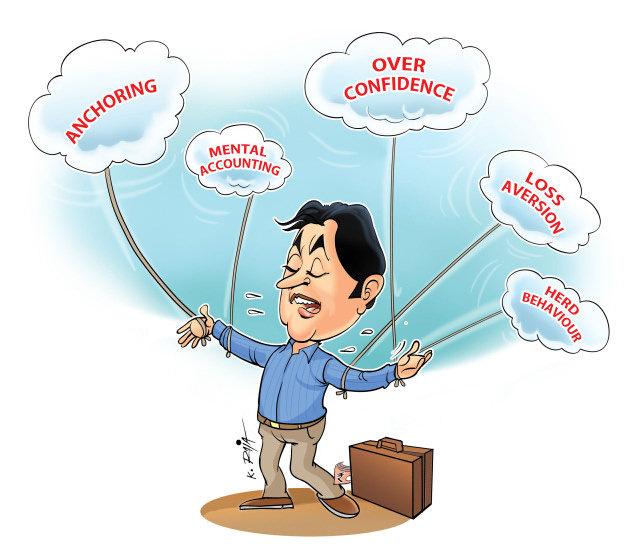
Today is the first day of Daylight Savings Time and we are adjusting to the loss of one hour. I have come across a few articles recently about how the anchoring choice of a decision comes into play. The conversation of how we truly decide and move forward is always on-going. Neuroscientists and Psychologists keep us busy reading their latest articles and the above picture shows another view of what goes on when we begin to make decisions.
Anchors Aweigh is a phrase used to release the weighted anchor holding a ship at the harbor. Anchoring Decisions is a form of cognitive bias we all have which may be based on our education, culture, whether we grew up in a small or large family and the physical environment we enjoyed as children. When we choose the first piece of information we hear about an event, we anchor on to it. Although we may ask for some other information, we usually go back to the first piece of information we hear, because we unconsciously believe it to be true.
Perhaps some people haven’t considered how often they anchor what they hear. Often times we wonder why someone may not move from a “position” and anchoring may be the reason. Here is an additional view of how our unconscious bias influences our decision making.
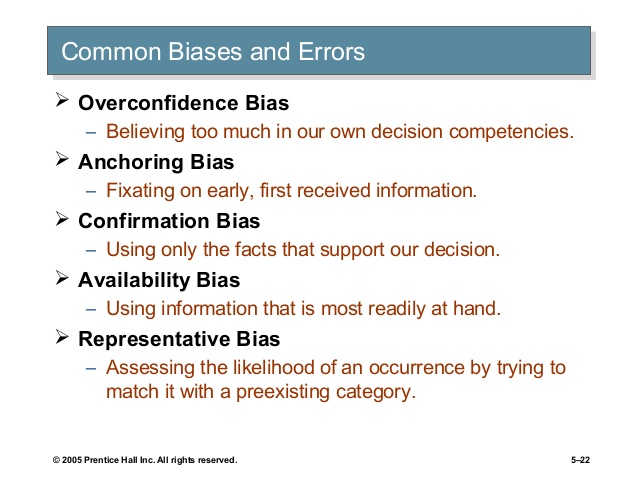
During this second week of March, 2015, consider how you Choose Who You Want to be Known As when reaching out to understand another person’s decision. Have a great week!
“Jo Ann” M. Radja, Executive and Career Management Coach

Chicago Children’s Choir 2014 from FoxChicago
It’s the 2nd day of Christmas and I wanted to share with you a few links you might enjoy. Greetings from the Midwest!
http://www.forbes.com/sites/augustturak/2014/12/24/a-christmas-parable-on-leadership/
http://www.forbes.com/sites/trulia/2014/12/17/13-holiday-party-hacks
“Jo Ann” M. Radja, Career Management Coach & Change Agent
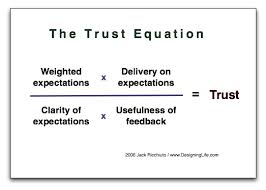
When I was growing up, I often heard the phrase, “What does your gut tell you?” or, “I’ve got a sick feeling in my stomach about this.” The phrase of listening to your gut has come into vogue again because neuroscience has recognized the gut communicates to the brain faster than your heart. Why is this important to know as we just finished the Halloween and Election events? Perhaps it is because trust is still an illusion. We want it, we rely on it and when it is not present in our lives, it causes disharmony that we learn to live with or just accept it because “that’s the way it is.”
While we trust our guts to assist us as we get ready for the early Winter weather in the month of November, we can learn to trust our guts in other situations. As you Choose Who You Want to be Known As this week, what positive value do you want people to know about you? Have a great week.
Yesterday I published a Post on the social media platform of LinkedIn and I am sharing it with you below. (https://www.linkedin.com/pulse/article/20141105210316-32215190–illusion-of-trust-as-an-ethical-value?trk=prof-post)
“Illusion of Trust” as an Ethical Value Nov 5 2014
While browsing for information online, I saw a link from The Good Men Project. I clicked to a Blog Post from the Executive Editor, Thomas G. Fiffer. I was intrigued by Thomas Fiffer’s choice of language and the above quotation is a phrase directly from his Blog of October 28, 2014. The Title of Thomas Fiffer’s Blog is, “3 Ways to Deal with Toxic Relationships.” http://www.goodmenproject.com/ethics-values/3-ways-spot-toxic-partner/
The first way is: If you’re familiar with the 80/20 rule – speaking only 20% of the time in a relationship indicates it is dysfunctional. In other words, you give your own power of self-worth to another person.
The second way is: “Attraction creates the illusion of trust.” Fiffer recommends you listen to your gut when your judgment is being put aside for the other. When it comes down to it – why are you not paying attention to the feeling of, “something is not right here.”
Finally the third way appears to be derived from a social science or neuroscience perspective. Fiffer explains that when you are ruled by fear, you don’t act rationally and are unable to accept rational explanations. This appears to be so because the fear reaction, once triggered, will not stop until it is soothed.
As you manage your career, how often do you trust your gut in contract to your personal experience with an issue? How often has your gut enabled the right decision for you (or at least the best possible)? Do you keep an open mind first and then trust your gut, or the reverse? Interesting questions to consider during this first week in November.
I’m grateful I followed the linked and learned about The Good Men Project and hope to read Thomas G. Fiffer again. As you Choose Who You Want to be Known As, consider how often you trust and rely on your gut instincts to make informed decisions. Enjoy your month of November in your career.
“Jo Ann” M. Radja, Career Management Coach and Change Agent”
Neuroscience is understanding the fundamental nature of ourselves…how we think, feel and do. Dr. Charles “Ed” Connor
Two days ago in my home State of Illinois, a multitude of tornadoes struck communities in at least 13 Counties. [It was reported some 17 tornadoes were sited and by Monday morning, 80 tornadoes blew through the Midwest Region.]
Many people who were interviewed, spoke about how grateful they were to be alive. While their home was destroyed, they could rebuild. While their possessions were taken in this act of nature, their life was spared. While years of joy in maintaining and furnishing their home was wiped out in a second or two, they were in a community of friends and neighbors (nearby and within Illinois), who gave them solace and friendship. The SYMBOL OF GRATITUDE resided in their hearts. Finding the personal truth in yourself during a time of crisis is a learned virtue as these citizens Chose Who they wanted to Be Known As.
The symbol of gratitude itself has been a bit difficult to track down. The circle is an accepted symbol of inclusiveness and represents many aspects of our human nature. Our Global community throughout the world has roots within the spirituality of GRATITUDE and the use of a circle symbol.
An art exhibit entitled, “Beauty and the Brain Revealed” is presently on display at the AAAS Art Gallery in Washington, D.C. Five days ago, Megan Gambino posted a Blog explaining this Art Exhibit http://blogs.smithsonianmag.com/artscience/2013/11/do-our-brains-find-certain-shapes-more-attractive-than-others/). Her Blog included a brief video of two Neuroscience Experts who discuss how our brains relate to abstract shapes.
Whether from exemplary observations of our neighbors or from recognized Neuroscientists, Choose Who You Want to be Known As in your careers, during this wintry week of November, 2013.
“Jo Ann” M. Radja, Career Management Coach
Notes: “Beauty and the Brain Revealed” is on display at the AAAS Art Gallery in Washington, D.C., through January 3, 2014. Read more: http://blogs.smithsonianmag.com/artscience/2013/11/do-our-brains-find-certain-shapes-more-attractive-than-others/#ixzz2l6p7kWlg Follow us: @SmithsonianMag on Twitter
Why do we find some works of art so appealing? The exhibition Beauty and the Brain Revealed at the American Association for the Advancement of Science builds on a 2010 collaboration between the Zanvyl Krieger Mind/Brain Institute at the Johns Hopkins University and
the Walters Art Museum to examine how the brain perceives abstract sculpture. The original project was initiated and funded by the Johns Hopkins Brain Science Institute. Gallery visitors will wear 3-D glasses to explore digitally morphed versions of sculpture and learn how 3-D
shape characteristics relate to aesthetic preferences. Through January 3, 2014
http://srhrl.aaas.org/projects/science_society/neurosociety/art.shtml November 19, 2013.

This gallery contains 3 photos.
Here’s a simple but powerful rule. Always give people more than what they expect to get. Nelson Boswell The holiday is over and we’re back to work today. When It Works is all about a daily success we strive for with … Continue reading
Recently, I was introduced to a quotation by Napoleon. I am not sure whether his quote is still universal. The quote is: “Religion is what keeps the poor from murdering the rich. ” The world is populated by more critical thinking people due to either higher education or skilled life experiences. In my view, the issue of Napoleon’s quote is not about religion per se. It is about people wanting and needing an understanding of life that their cultural myths did not fulfill.
What does this quotation have to do with Career Management Coaching? Our cosmopolitan and open land communities now have more choices than Napoleon’s community did. Communication networks over the past 30 some years have so connected the communities of the world, that we love hearing what’s happening, almost instantly. People of all ages share real and on-time information.
The question we face daily is how do we handle all of the information we learn, or hear? How does it affect our lives and the people that we come in contact with? What can we do to channel this on-going communication in the direction of our choices, whether in our business dealings, our home life or our spiritual life.
To choose is, to be responsible and accountable for our actions that follow our choice. Many more people discuss and are familiar with the concepts of responsibility and accountability, from different perspectives, than during Napoleon”s time. Today, spiritual guidance warmly assists us, as opposed to being the only source of our sense of fulfillment, as Napoleon believed, long ago.
There is no “magic” answer in our path of discovery of how we act. We strive to be the best we can be in whatever we do, as we Choose Who We Want to Be Known As. Enjoy your week!
“Jo Ann” M. Radja, Career Management Coach & Change Agent

 Career Management Coaching